Summary of our 2025 presenters
Block I | Methods
This session introduces foundational methods for constructing, evaluating, and interpreting genetic and epigenetic measures in population research. Presenters will cover ethical considerations in polygenic score research, innovations in ensemble PGI construction from GWAS summary statistics, and novel approaches for disentangling genetic and environmental contributions using sibling quasi-experimental designs. Together, these talks offer conceptual and technical grounding for interdisciplinary researchers working at the intersection of genetics and the social sciences.
Jean Cadigan | University of North Carolina at Chapel Hill
Between Promise and Risk: Reflections from Researchers Using Polygenic Scores for Social Traits
Jonathan Beauchamp | George Mason University
Nature, nurture, and socioeconomic outcomes: New evidence from sib pairs and molecular genetic data
Qiongshi Lu | University of Wisconsin-Madison
One score to rule them all: regularized ensemble polygenic risk prediction with GWAS summary statistics
Patrick Turley | University of Southern California
Two Novel Methods Greatly Increase the Precision of Sibling-based Heritability and Partitioned Heritability Estimates
Jeffrey Swigert | University of Southern California
Genomic-Relatedness Matching Expands Population Coverage, Improves Power and Reduces Bias in Genetic Association Analyses
Sarah M. Merrill | University of Massachusetts Lowell
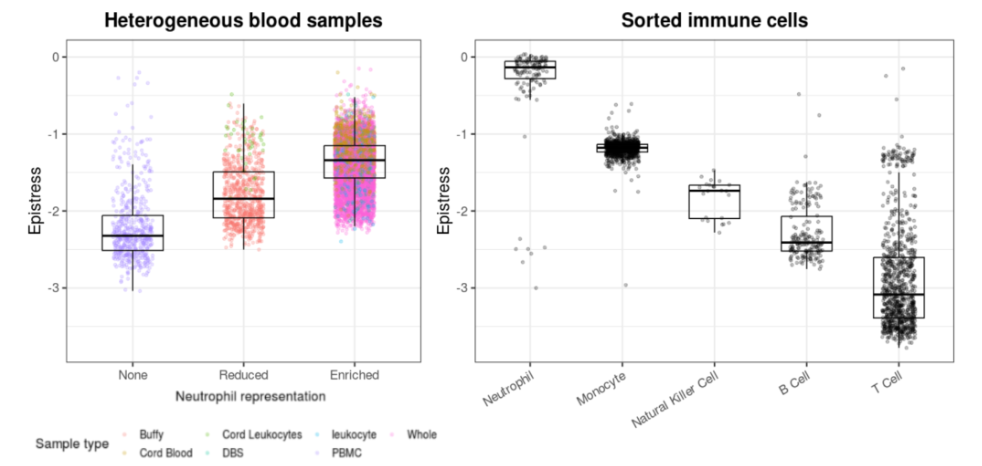
Impact of age-related changes in buccal epithelial cells on pediatric epigenetic biomarker research
Block II | Genomic Economics
This session explores how genetic predispositions interact with social and institutional environments to shape economic outcomes. Talks examine the causal effects of personality traits on wealth, the influence of children’s genetics on parental finances, and the moderating role of education and labor market structures on genetic returns. Together, these presentations illustrate the bidirectional and policy-relevant ways that genes and environments jointly produce economic inequality.
Joakim Ebeltoft | University of Oslo
Child genetic effects on parent finances in the Norwegian welfare state
Leandro Carvalho | University of Southern California
Personality Traits, Human Capital Formation & Economic Behavior: Exploiting Random Genetic Variation to Study the Causal Effects of Personality Traits
Giorgia Mezzetti | University of Bologna
The Role of Gene–Environment Interaction in the Gender Wage Gap
Pietro Biroli | University of Bologna
Genetically Informed Estimation of Marginal Returns to Education
Yannick Reichlin | Bocconi University
The Heterogeneous Impact of Automation on Older Workers
Tomeu López-Nieto Veitch | University of Bologna
The Causal Effects of Educational Policies on Assortative Mating
Block III | Ancestry, Environment & Genetic Risk
This session explores how genetic ancestry and social context shape health and behavioral outcomes. Talks examine patterns of assortative mating, cardiometabolic risk across ancestry groups, and gene-environment interactions involving BMI, obesity, and aging resilience. Collectively, the presentations underscore the importance of incorporating population structure and environmental variation when interpreting genetic influences on complex traits.
Luyin Zhang | Princeton University
Genetic Ancestry-Based Assortative Mating within the U.S. Black and Hispanic Populations
Silvia Barcellos | University of Wisconsin-Madison
The Effects of African Genetic Ancestry Proportion on Cardiometabolic Health Outcomes in the AllofUs Research Program
Dalton Conley | Princeton University
Children’s genetic liability for psychopathology and parental health behaviors
Shutian Liu | Imperial College London
Socioeconomic Disparities in Adolescent BMI: Disentangling Genetic and Environmental Pathways Using the UK Millennium Cohort Study
Tadeja Gracner | University of Southern California
Early-life Sugar Restrictions Narrow Genetic Disparities in Adult Obesity
Nicole Gladish | Stanford University
Disentangling Genetic and Environmental Contributions to Longevity in the Nicoya Population
Block IV | Societal Epigenetics
This session explores how structural and environmental factors, including ancestry, pollution, healthcare access, incarceration, and military service, influence biological aging through epigenetic pathways. Presenters highlight disparities in epigenetic clock performance across populations and demonstrate how public policies and institutional exposures shape molecular aging. Together, these talks emphasize the need for context-aware approaches in epigenetic research.
Gillian Meeks | UC Davis
Common DNA Sequence Variation Influences Epigenetic Aging in African Populations
Amanda Kurowski | University of British Columbia
Socioeconomic Determinants and Biological Aging: Exploring the Potential Mediating Role of Environmental Exposures in the Canadian Longitudinal Study on Aging
Nicolau Martin-Bassols | University of Bologna
The Causal Effect of Medicaid and CHIP on Epigenetic Ageing
Francesco DiRienzo | University of Cincinnati
The Association Between Arrest Experiences and Biological Aging in Childhood and Adolescence: A Longitudinal Analysis
Block V | Adversity Epigenetics
This session examines how early-life adversity, trauma, chronic stress, and resilience shape biological aging through epigenetic mechanisms. Talks explore the impacts of violence, perceived stress, and adverse childhood experiences, as well as intergenerational transmission and the dynamics of aging in Costa Rica’s well-known longevity hotspot. The session highlights both biological vulnerability and resilience in response to psychosocial and environmental exposures.
Maleah Fekete | Indiana University
The Role of Stress Proliferation in Linking Adverse Childhood Experiences to Accelerated Biological Aging
Shaimaa Elrefaay | UC San Francisco
Epigenetic and Transcriptomic Profiles of Immune, Inflammatory, and Cellular Transduction Pathways Are Associated With Severe and Chronic Perceived Stress in Midlife Women
Brooke McKenna | Purdue University | Massachusetts General Hospital
Childhood Exposure to Violence: Associations with DNA Methylation in a South African Birth Cohort
Leland Fleming | McLean Hospital | Harvard Medical School
Epigenetic Mirroring Between Mothers and Infants: The Intergenerational Impact of Early Life Adversity
Hannah-Ruth Engelbrecht | University of British Columbia
A lack of time – no evidence of reduced epigenetic age acceleration in the longevity hot spot of Costa Rica within the Costa Rican Longevity and Healthy Aging Study